
We all know how vital a good night’s sleep is for our health and wellbeing. But in our fast paced world, many of us struggle to find that restful, restorative sleep we desperately need. If you’ve ever found yourself tossing and turning, you’ll know how frustrating it is.
The good news? A regular yoga practice can be a powerful tool for calming your mind and body, helping you fall asleep faster and stay asleep longer. Even a short, consistent ten minute practice can train your nervous system to relax and unwind more easily. It’s not just about stretching, yoga, at its heart, is a practice of unity, bringing together the physical, mental, and emotional parts of ourselves to create harmony.
1. It’s a Gentle, Stress Reducing Form of Exercise
When you’re stressed, your body holds onto tension. This can show up as a stiff neck, sore shoulders, or a tight lower back. The physical practice of yoga- the asana – is a gentle but effective way to release this physical tension.
By moving your body and stretching through different poses, you release those areas of tightness. This physical release helps to relieve stress, releasing feel-good hormones called endorphins, which create a sense of calm and wellbeing. This practice is an embodiment of Ahimsa, or non-harm. By treating your body with gentle movement rather than pushing it to its limits, you respect its needs and prepare it for a comfortable, restful state.
2. It Teaches You to Control Your Breathing
Pranayama, or breathwork, is a fundamental part of yoga. It’s also one of the most powerful tools for calming your nervous system. Often, when we’re stressed, our breath becomes shallow and rapid, restricted to the upper chest.
Yoga teaches you to become aware of your breath and, more importantly, to deepen and lengthen it. By consciously taking long, slow, deep breaths, you send a signal to your body that you are safe and can relax.This simple technique is a form of active meditation that can immediately reduce stress and help you drift off to sleep.
Breath is the king of the mind.
B.K.S Iyenger
3. It Regulates Your Nervous System
Do you ever feel wired but tired. You might be physically exhausted, but your mind is still racing. This is often because your body is stuck in a state of fight or flight, also known as your sympathetic nervous system. This is what gets activated during stressful moments, like rushing to meet a deadline or getting into an argument.
Yoga helps you shift from this high-alert state into “rest and digest,” the parasympathetic nervous system.This is the state where your heart rate slows, your muscles relax, and your body can truly rest and restore itself. By activating this calming response, yoga prepares your body for the deep, restorative sleep it needs.
4. It Quietens a Racing Mind
You can’t get to sleep if your mind is a constant loop of worries, to do lists and endless thoughts. Yoga is a form of moving meditation that forces you to be present and in the moment.
When you are focused on moving into and out of poses, paying attention to your balance in Tree Pose or holding a specific stretch, there isn’t much room for your mind to wander. This focused attention acts as a mental detox, decluttering the brain and creating a sense of clarity and mental space. The ancient yogis understood this deeply knowing that a clear mind was the first step toward true rest.
Ready to Try? Two Simple Poses for a Better Night’s Sleep
You don’t need a full hour long routine to feel the benefits. A few minutes of intentional stretching and breathing can make all the difference. Try these two gentle poses, which are known for their calming effects on the nervous system. You can even do them from the comfort of your bed!
Child’s Pose (Balasana)
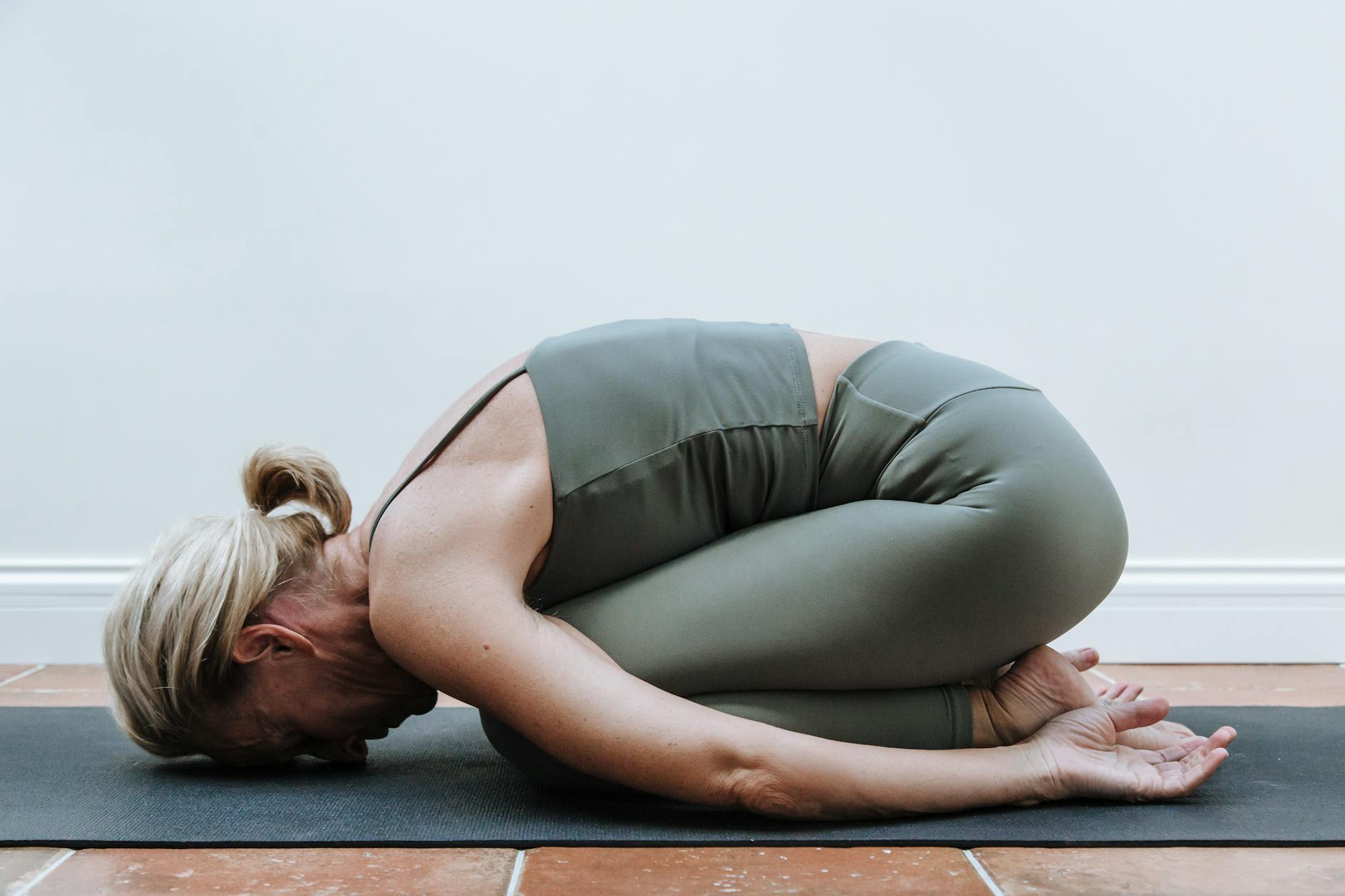
This is the ultimate resting posture. It’s a gentle forward fold that calms the mind and releases tension in your back, hips, and shoulders.
- Start on your hands and knees.
- Bring your knees wider than your hips and big toes to touch
- Sit your hips back towards your heels.
- Stretching your arms in front will give you more shoulder stretch but less effort is to rest your arms alongside your legs, palms facing up. Let your chest sink down toward the bed).
- Rest your forehead on the bed, or on a pillow if that’s more comfortable.
- Breathe deeply here for 1 to 2 minutes, feeling your belly expand on the inhale and deflate on the exhale.
Legs Up the Wall (Viparita Karani)
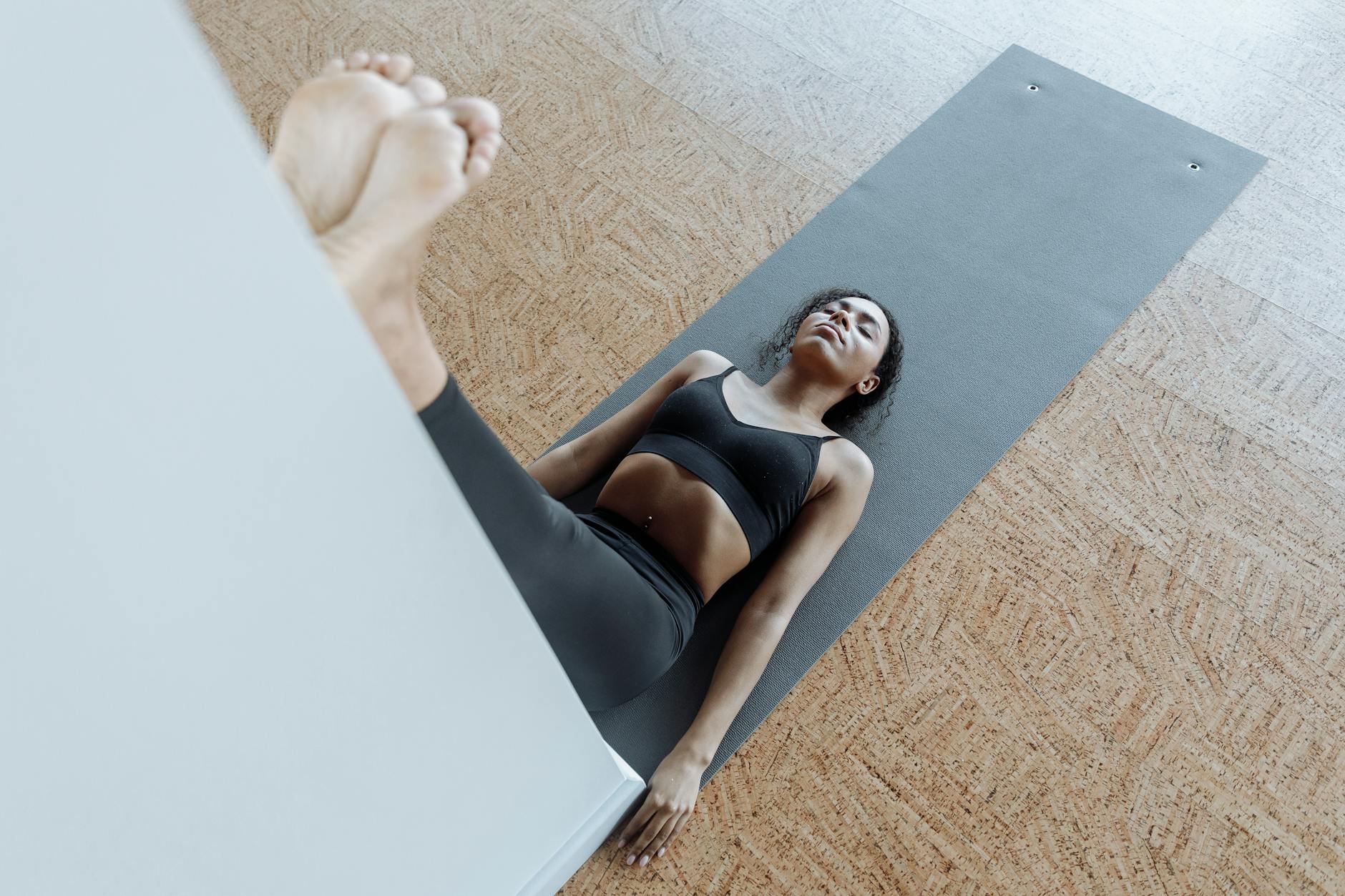
This is a restorative pose that helps to reverse the effects of gravity and calm the body. It’s perfect for unwinding after a long day of standing or sitting.
- Find a space near a wall (or your headboard).
- Lie on your back with your hips as close to the wall as you can get them.
- Extend your legs straight up against the wall.
- Rest your arms by your sides, with your palms facing up.
- Allow your shoulders, neck, and jaw to soften. Stay here for 3 to 5 minutes, simply breathing and letting the stress melt away.
So, there you have it. For more restful sleep, just a little yoga before bedtime can encourage your nervous system to relax and unwind. Yoga really is so much more than just exercise…it’s a holistic approach to managing stress, calming your mind, and preparing your body for the rest it deserves.
Find your inner strength – body ~ mind ~ spirit.
Happy Zzzzz’s all,
Claire x
Disclaimer: The information in this post is for educational purposes only and is not a substitute for professional medical advice. Always consult a healthcare professional before making changes to your health routine.
 Claire Fratson Yoga Warriors
Leave a comment