November is in sight and a distinct shift is occurring. We’re on the cusp of the school half term break and Halloween fun, Bonfire Night fireworks light up the sky, and this weekend the clocks fall back ushering in longer, darker evenings.
We are immediately bombarded with a romanticised view of the cold through social media and advertising – imagery of perfect crispy walks and endless mugs of hot chocolate. Simultaneously, the annual festive build up begins, creating a strong pull and pressure towards celebration and often, a sense of rushing.
And while these moments of comfort and anticipation are wonderful, for some, the transition into the darker half of the year can be a challenging one.

The reduced daylight hours and the natural inclination to huddle indoors can impact our mood and energy levels. It’s not uncommon to feel a sense of low mood, and for some, the symptoms of Seasonal Affective Disorder (SAD) can begin to emerge. The desire to stay inside, to hibernate, becomes strong – but what if the very best thing you could do for yourself is to gently resist that urge and join a yoga class?
My yoga approach is grounded in understanding both the science of seasonal impact on the body and mind, and our deep connection to nature’s cycle. Think about it: as the weather grows colder, our bodies naturally want to hunch, to contract, to conserve warmth. We spend more time sitting indoors, often in less than ideal postures, leading to stiffness and tension.
What the Cold Does to Your Body
When the external temperature drops, your body activates a natural, involuntary defence system called vasoconstriction. In simple terms, this means the blood vessels just beneath your skin narrow and constrict. Your body does this to reduce blood flow to your extremities (arms, legs, fingers, and toes) to keep the warmer blood concentrated around your vital organs (your core).
This is a survival mechanism to conserve heat, but it has side effects. The reduced blood flow to your muscles can leave you feeling stiff, cold, and a little sluggish. Plus, your body is working harder like running on a higher idle which can sometimes raise your blood pressure. The natural result is that primal urge to huddle and contract, making you feel physically and energetically closed off.
However, while yoga can’t cure the physiological effects of the cold weather it offers a deeply valuable tool to help the body and mind adapt to this cold, darker season.
Yoga: Your Winter Wellness Toolkit
Here’s how a consistent yoga practice can become your greatest ally during this transitional period:
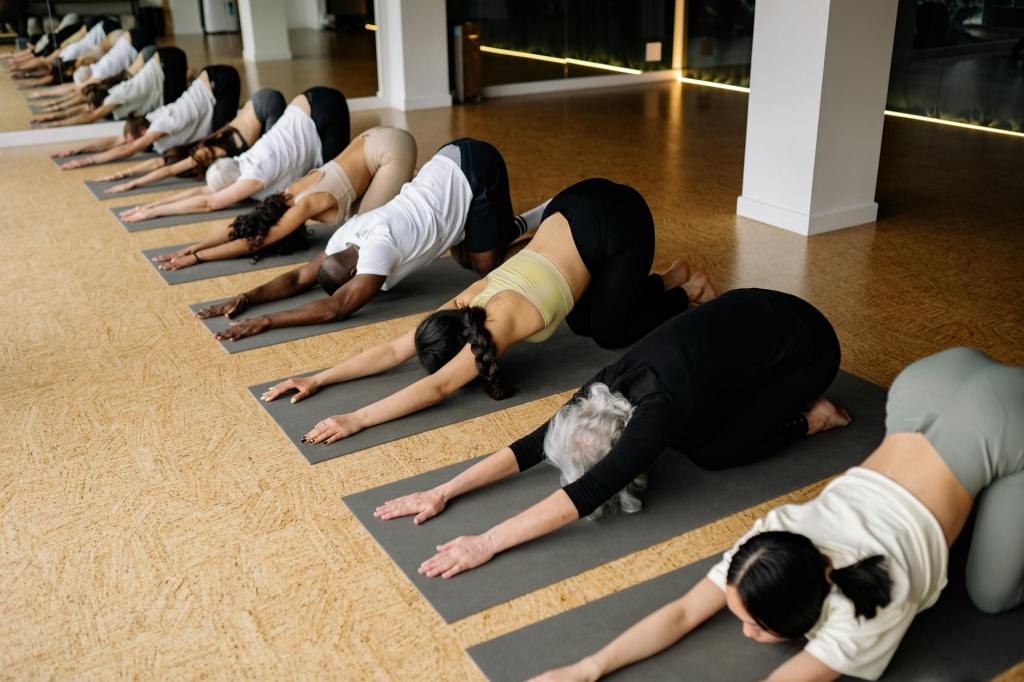
The Healing Power of Community: The Vitamin C(ommunity) Fix While the physical and mental benefits of yoga are widely known, attending a class offers the profound, basic human benefit of connection. Being in a room with other people, sharing breath, moving together, and acknowledging each other is a vital social activity that combats the feeling of isolation. Scientific studies have shown that positive social interaction reduces stress hormones and increases feelings of belonging. This focus on Vitamin C(ommunity) is the essential, basic human nutrient we need as we naturally retreat indoors and our routines become solitary.
Your Natural Serotonin Boost Yoga, particularly practices that focus on mindful movement and breathwork, has been shown to positively impact neurotransmitters like serotonin, which plays a key role in mood regulation. The physical activity itself is a natural mood booster, and the meditative aspects of yoga help to calm the nervous system, reducing anxiety and promoting a sense of wellbeing.
Unclench and Unfreeze: Easing Stiff Muscles As we instinctively hunch against the cold and spend more time sedentary, our bodies can become tight and achy. Yoga offers a perfect antidote, gently lengthening muscles, improving circulation, and increasing flexibility. Imagine releasing tension from your shoulders, opening your chest, and finding space in your spine – all crucial at a time when we tend to fold inwards.
Cultivate Steady Inner Warmth Even slower practices like Hatha can generate substantial internal heat. By focusing on sustained muscle engagement, deepening your breathwork (Pranayama), and holding poses mindfully, you build warmth from your core outward, directly counteracting the external cold. This internal fire cultivates a steady source of energy that helps to combat the sluggishness often associated with less daylight.
Find Grounding In a season when many feel out of sorts or a bit disconnected from the outdoors, yoga offers a powerful way to reconnect with your own inner compass. It provides a dedicated bit of space to just be present, listen to what your body is telling you, and find your bearings even when things outside feel a bit dull.
Don’t Let the Dark Dull Your Spirit
While the comfort and enjoyment of a cosy blanket and a warm drink is undeniable, consider making space for something that will truly nourish you from the inside out. Don’t let the dark half of the year dull your spirit. Instead, embrace the opportunity to tend to your body, mind and spirit with the gentle yet powerful practice of yoga.
 Claire Fratson Yoga Warriors
Leave a comment